There is a phrase in Hindi — Dilli ki sardi — that means, simply, "the cold of Delhi." But the phrase carries cultural weight that the literal translation cannot convey. Dilli ki sardi is not just a weather condition. It is a season that the city anticipates, celebrates, and structures its life around. When the first cold front arrives in late November, Delhi changes. The food changes, the clothes change, the pace of the day changes, and — most surprisingly, for a city famous for its heat — the mornings come alive.
This is the counterintuitive truth of Delhi's winter: the colder it gets, the earlier the city wakes. In the summer, when the temperature hits 45°C by noon, the mornings are a retreat — you walk early because by 9 AM it is unbearable. In the winter, the mornings are the point. The air is sharp and clean (or as clean as Delhi's air ever gets). The light is soft. The parks fill with walkers in woolen caps. The chai stalls do their best business before sunrise. Delhi in winter is a morning city, and if you sleep past 7 AM, you have missed the best part of the day.
The Geography of the Cold
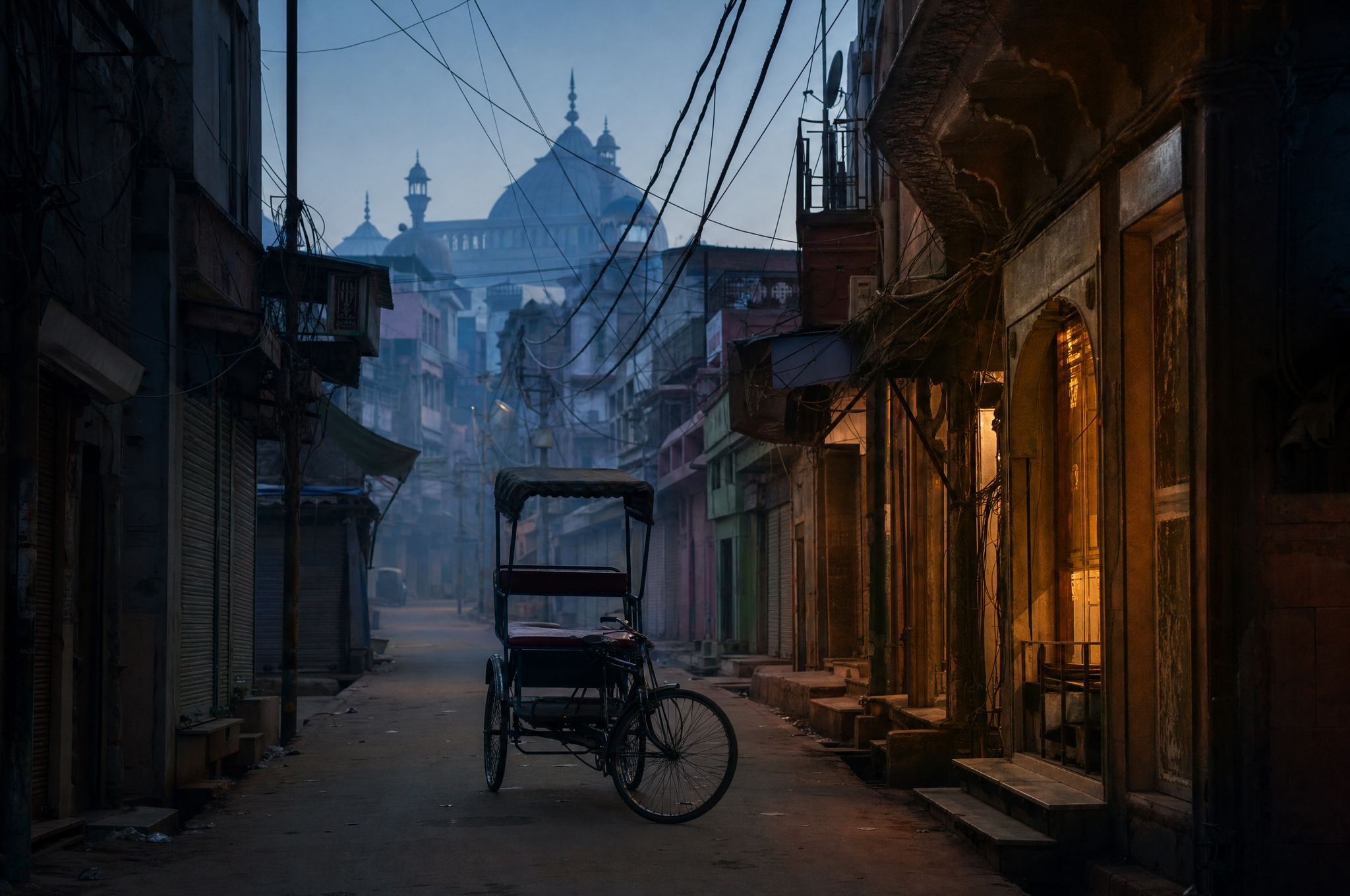
Delhi's winter, which runs roughly from late November to mid-February, is caused by the western disturbance — weather systems that originate in the Mediterranean and travel eastward across Iran, Pakistan, and into north India, bringing cold air and, frequently, rain. The temperature in Delhi during this period typically ranges from 4°C to 18°C, with occasional cold spells that drop the minimum to near freezing. The humidity is high, especially in the mornings, and the result is fog — sometimes dense enough to close the airport, sometimes light enough to simply soften the city's edges.
The cold is not uniform. South Delhi, which sits on the Aravalli ridge, is typically 2–3 degrees warmer than the northern and western parts of the city, which sit in low-lying areas where cold air pools. Old Delhi, with its dense construction and narrow lanes, can feel colder than the open boulevards of Lutyens' Delhi — the buildings block the sun, and the stone walls retain the night's chill well into the morning. If you want to understand why the Mughals built their palaces with south-facing courtyards and thick walls, spend a January morning in Chandni Chowk.
The Parks at Dawn
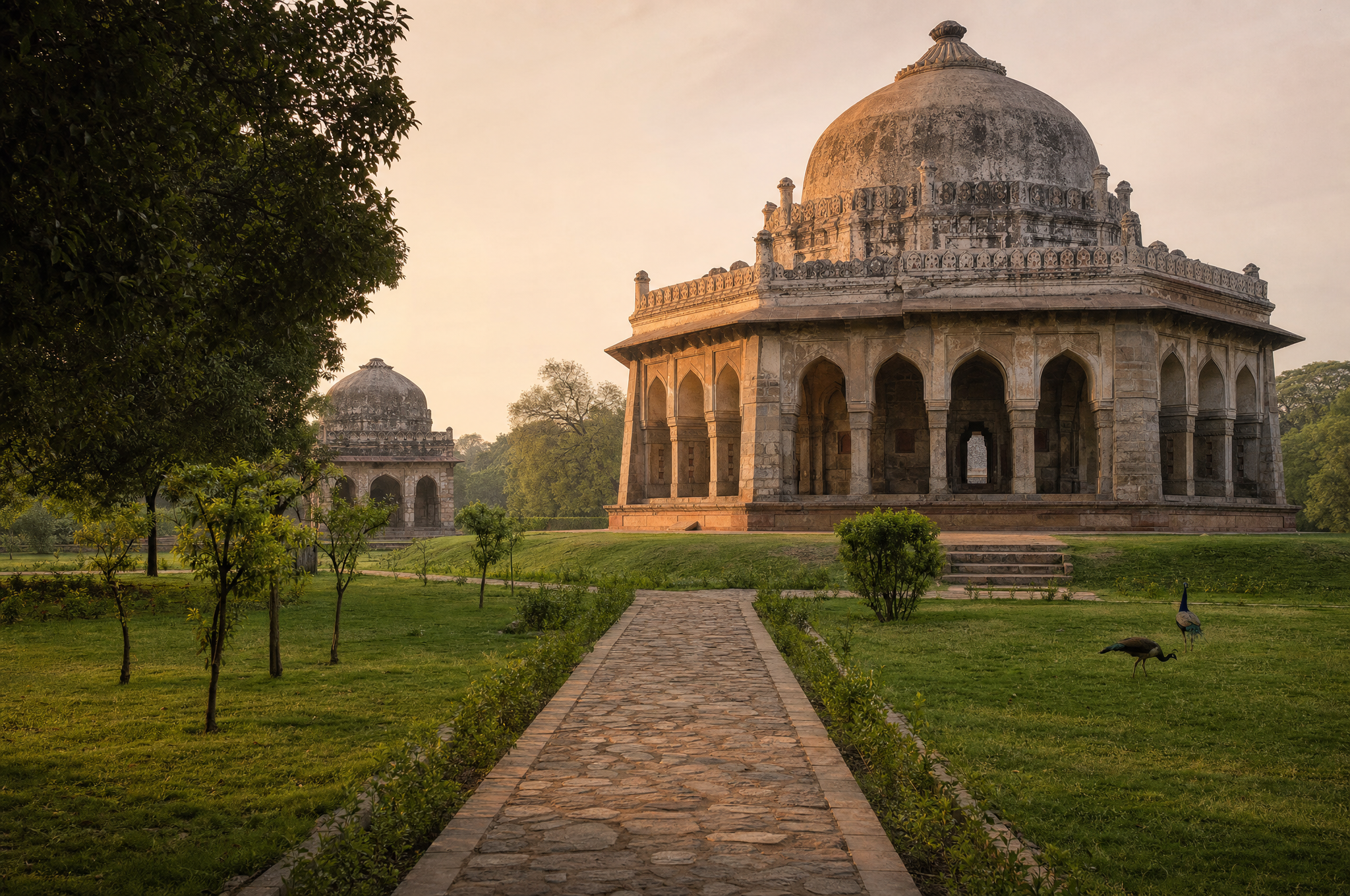
The central institution of Delhi's winter morning culture is the park. Delhi has, by some estimates, over 16,000 parks and green spaces — more than any other Indian city — and in the winter they fill before sunrise. Lodhi Gardens, the Nehru Park, the Deer Park in Hauz Khas, the District Parks in every neighborhood — by 6:15 AM, they are full.
The demographic is specific and ritualized. The walkers come in waves. First, the serious fitness crowd — the runners, the power-walkers, the yoga groups that gather under specific trees with the regularity of a congregation. Then the retired couples, walking in companionable pairs, often in matching sweaters. Then the domestic workers, walking to the bus stops, their mornings already half-done. By 8 AM, when the sun has burned off the fog and the temperature has climbed from 5°C to 12°C, the early crowd thins and the late morning crowd — families, children, dog-walkers — takes over.
The chai wallah outside Lodhi Gardens once told me that he sells more tea between 5:30 and 7:30 AM in January than he sells all day in July. The cold, he said, is good for business.
The chai stalls are the unsung infrastructure of the winter morning. Every park has one, or several, at its gates, and they open by 5 AM. The tea in winter is different — stronger, sweeter, and brewed with more ginger than at any other time of year, because ginger is warming in the Ayurvedic tradition, and because the vendors know their customers need it. A kulhar of chai, held in both hands, steaming in the cold air, is one of the great sensory experiences of Delhi, and it costs twelve rupees.
The Food of the Cold
Delhi's food calendar is, in many ways, built around the winter. The seasonal specialties that appear in November and disappear by February are some of the best things the city eats:
- Sarson ka saag and makki ki roti: Mustard greens cooked slowly with spinach and spices, served with a flatbread made of cornmeal and a dollop of white butter. This is Punjab's gift to Delhi's winter, and the best versions are found in the dhabas of outer Delhi or in Punjabi homes. It is heavy, rich, and exactly what 6°C demands.
- Gajak and rewri: Sesame and jaggery candies, made in the winter because the sesame harvest coincides with the cold season. The crisp, nutty sweetness is a cold-weather staple, sold at every intersection and train station. The best comes from the old shops in Old Delhi.
- Daulat ki chaat: A fragile, foam-like dessert made by churning milk overnight in the cold air, then topping it with khoya and pistachios. It is only available in winter, because it requires temperatures below 10°C to set. It is sold, famously, in the lanes of Old Delhi, and it is one of the most delicate sweets in Indian cuisine.
- Carrot halwa (gajar ka halwa): The iconic winter dessert — grated red carrots cooked down with milk, ghee, and sugar until they collapse into a dense, sweet pudding. The carrots available in Delhi's winter are a specific red variety, sweeter and more flavorful than the orange carrots available year-round, and the halwa made from them is a different dish entirely.
For a deeper dive into the food of Old Delhi — where many of these winter specialties are found — see our guides to Chandni Chowk at dawn and the Paratha Wali Gali. And for practical advice on eating safely during your winter visit, our street food safety guide is, of course, seasonally agnostic.
The Light
There is a quality of light in Delhi's winter mornings that photographers know well. The fog — or the haze, on days when the fog doesn't fully form — diffuses the sun, turning the early hours into a long, soft, golden period that lasts from about 7 AM to 9:30 AM. The light is low and warm, the shadows are long and gentle, and the city's red sandstone monuments — the Lodhi tombs, Humayun's Tomb, the Qutub Minar — glow with a color that does not exist in the summer. If you are a photographer, winter is the season to visit Delhi. The light does half your work for you.
The Discomforts (and They Are Real)
This is not a wholly romantic account. Delhi's winter has its miseries. The air pollution, which peaks in November and December due to crop stubble burning in Punjab and Haryana, combines with the fog to create a toxic haze that can make the mornings unhealthy as well as beautiful. The homeless population of Delhi — estimated at over 150,000 — suffers acutely during cold spells, and the city's night shelters are insufficient. The cold is a pleasure for those who have warm homes and a hardship for those who do not, and it is worth remembering this even as you enjoy the morning.
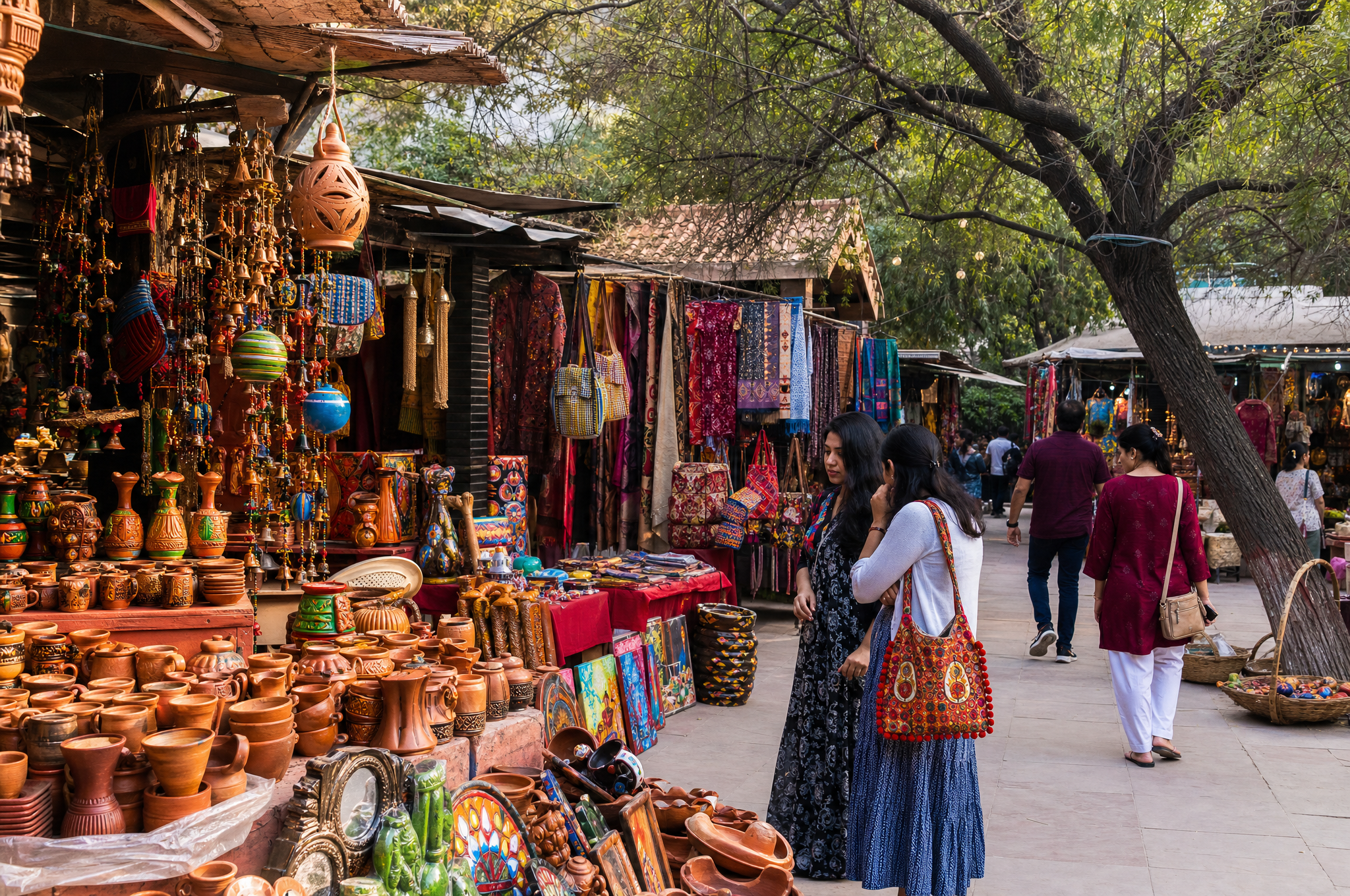
For visitors, the practical advice is: layer up. Delhi's winter is not extreme by European or North American standards, but the humidity makes the cold feel damp and penetrating. A warm jacket, a sweater, and a shawl (which you can buy at any market for a few hundred rupees) are sufficient. Avoid the temptation to overdress — by 11 AM, the sun will be warm, and you will be carrying your jacket.
The Reward
But for all that, the winter morning in Delhi is one of the city's great gifts. The combination of cold air, soft light, hot chai, and the sight of a city that has chosen, collectively, to wake up early and be outside — it is a culture that does not exist in the summer, and it is a culture that, once you have experienced it, you will miss when it is gone. Dilli ki sardi is a season. But it is also a way of being in the city, and it is, in this editor's opinion, the best time to be in Delhi.