There is a particular kind of exhaustion that sets in around the second hour of a Dilli Haat visit. You have browsed your fiftieth stall of terracotta pottery, eaten something spicy enough to require a lassi intervention, and realized that the Kashmiri pashmina you were quoted twelve thousand rupees for is, at the next stall, eight thousand. The market is not large — three acres, roughly — but it is dense, and its logic is not immediately apparent. This guide is for the person who wants to enjoy Dilli Haat without spending half the day figuring out how it works.
What Dilli Haat Actually Is
Opened in 1994 as a collaboration between the Delhi Tourism board and the Dastkari Haat Samiti, Dilli Haat was conceived as a permanent crafts market where artisans from across India could sell directly to consumers. The model is simple: each stall is allocated to a state or a craft cooperative for a fifteen-day rotation, after which a new group of artisans takes over. This means the market is never the same twice. A stall selling Madhubani paintings from Bihar this week might be selling cane furniture from Assam next week.
There are now three Dilli Haat locations — the original at INA, one at Pitampura in north Delhi, and one at Janakpuri in west Delhi. The INA market is the one to visit. It has the best food court, the most consistent craft quality, and the most convenient Metro access (INA station, Yellow Line, exit gate 1).
The entry fee is nominal — thirty rupees for adults, ten for children — and the market is open daily from 10:30 AM to 9:00 PM. Go on a weekday if you can. Weekends are packed.
What to Eat
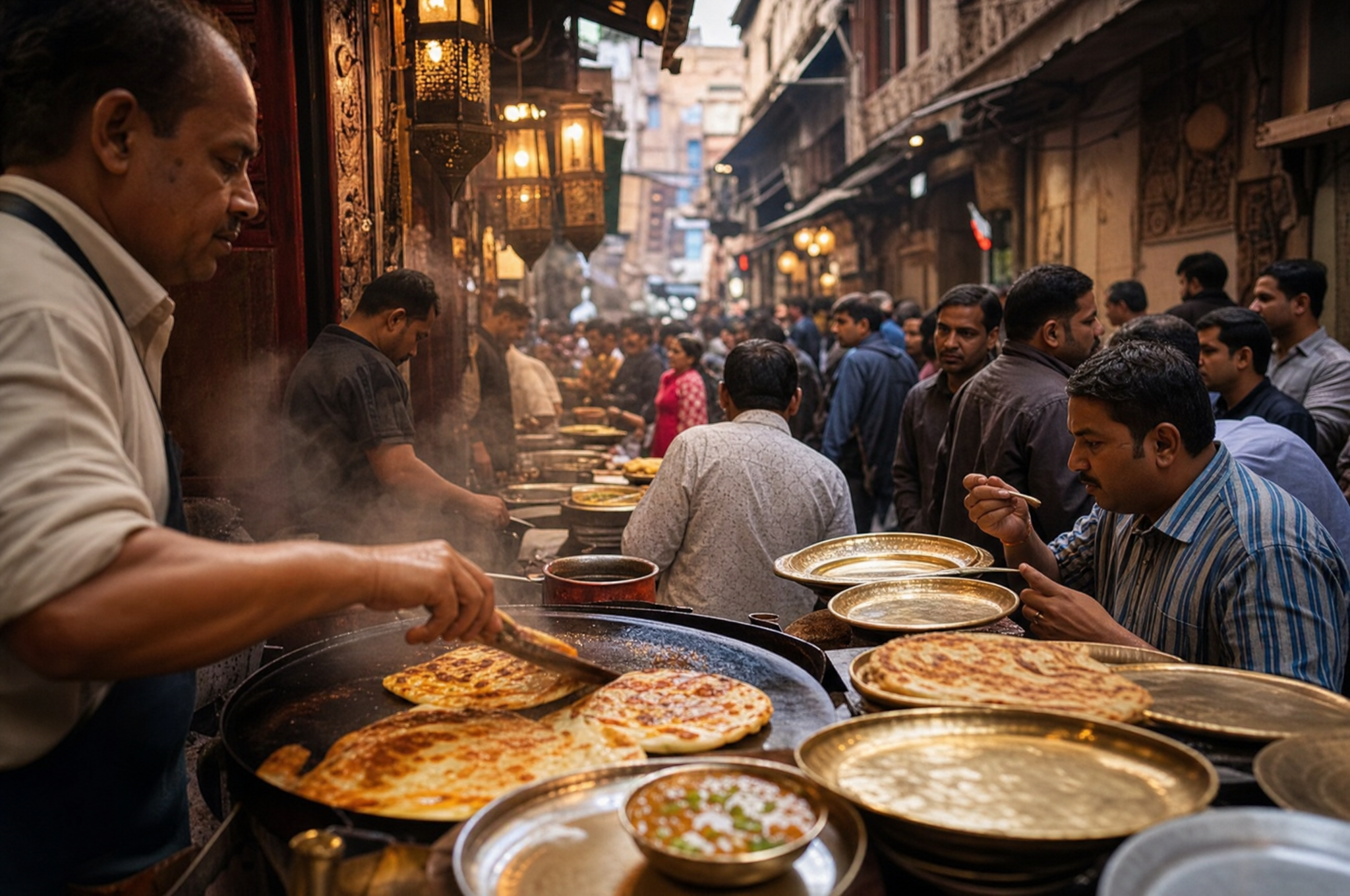
The food court at Dilli Haat is, in some ways, more interesting than the crafts. Each state runs its own stall, and the food is prepared by cooks brought in from that state — not adapted for tourist palates, which means the Andhra stall is genuinely fiery and the Kashmiri stall genuinely uses saffron. Here is what to seek out:
- Lakshadweep Stall: Tuna curry and rice. This is one of the few places in Delhi where you can eat food from the Lakshadweep islands, and the tuna — caught and shipped frozen — is surprisingly good. Order it with the parboiled rice that comes with it.
- Nagaland Stall: Smoked pork with bamboo shoot and akhuni (fermented soybean). The smoky, fermented flavors are unlike anything else in Indian cuisine, and the Naga kitchen here is widely considered the best regional food stall in the market.
- Kashmir Stall: Wazwan thali — a miniature version of the multi-course Kashmiri feast, featuring gushtaba (meatballs in yogurt gravy), rista (meatballs in red gravy), and seekh kebab. It is expensive by market standards (around 400 rupees) but generous.
- Maharashtra Stall: Vada pav and sabudana vada. Reliable, cheap, and the closest thing to a quick snack in the market.
- Rajasthan Stall: Dal baati churma — the baked wheat balls served with lentils and sweetened cereal. It is heavy, so share it.
Skip the momos. They are fine, but you did not come to a pan-Indian crafts market to eat Tibetan dumplings you can get on every street corner in south Delhi. For more on Delhi's street food landscape, see our piece on eating adventurously without getting sick.
What to Buy
The key to shopping at Dilli Haat is understanding that the quality varies enormously from rotation to rotation, but certain categories are consistently strong:
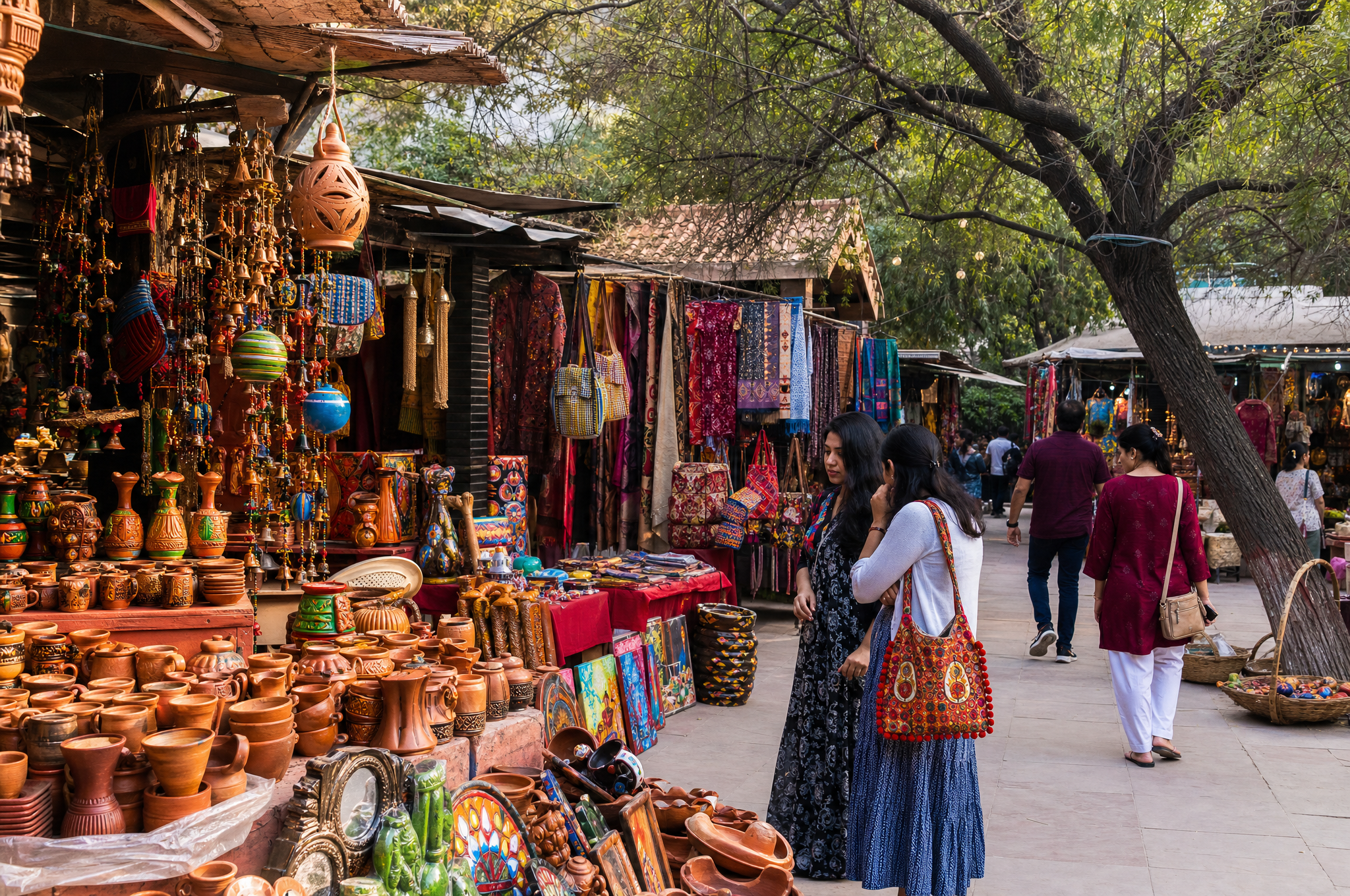
Textiles: This is the market's greatest strength. Look for handloom cottons from Andhra and Telangana, bandhani from Gujarat and Rajasthan, and kantha embroidery from West Bengal. The prices are fixed by the artisans themselves (not haggled down to nothing by middlemen), which means you pay a fair price but also that the quality is genuinely handcrafted. A good cotton sari should cost between 1,500 and 4,000 rupees depending on the weave complexity.
Metalware: Bidri work from Karnataka — blackened zinc alloy inlaid with silver — is almost always available and makes for excellent gifts. Moradabad brass is also well-represented, though the quality varies.
Leather: Kolhapuri chappals from Maharashtra and juttis from Rajasthan are reliable. Try them on; sizing is inconsistent.
Stone and Terracotta: The terracotta from West Bengal and the sandstone carvings from Odisha are worth seeking out, but they are fragile — bring packing material or ask the artisan to wrap carefully.
The market was built so that the artisan and the customer meet face to face. Ask the person selling where they're from, how long they've been doing this work. The story is part of the object.
What to Skip
Every Dilli Haat has a few stalls that have been there since the market opened and have, over the years, drifted toward selling mass-produced goods at inflated prices. Be cautious of:
- Mass-produced scarves labeled "pashmina": Real pashmina comes from the underbelly of the Changthangi goat in Ladakh, takes weeks to weave, and costs upwards of 8,000 rupees. If it's 1,500 rupees and feels suspiciously soft, it's viscose. There are genuine pashmina sellers here, but you need to ask for the handloom certificate and check for the characteristic weave irregularities.
- Decorative items with no clear regional origin: If a stall is selling "Indian art" that could be from anywhere, it's probably from a factory in Moradabad or Saharanpur. The whole point of Dilli Haat is regional specificity.
- Anything that looks like it came from Sarojini Nagar: If you've seen it in a fashion market for 200 rupees, it doesn't belong here at 800.
Practical Tips
Carry cash. Most stalls accept UPI now, but the network is unreliable in the market's corners, and many older artisans still prefer cash. Bring a tote bag — the market does not provide bags, and you'll accumulate purchases faster than you expect. Wear comfortable shoes; the ground is uneven stone paving. And go hungry. The food court is half the experience.
Budget two to three hours for a first visit. Dilli Haat rewards browsing, and the best finds are rarely at the stalls near the entrance. Walk the perimeter first, then cut through the center. The artisan stalls — as opposed to the food stalls — are arranged roughly by region, so if you're looking for something specific, ask at the information booth near the main gate.
Finally, remember that Dilli Haat is not just a market. It's a rolling exhibition of Indian craft traditions, and the artisans you meet have often traveled days to be there. The purchase you make supports a craft economy that is, in many cases, struggling. Pay fairly, ask questions, and take the stories home with the objects.