There are two monuments in the Qutub complex, and they tell opposite stories. The first, the Qutub Minar, is a monument to conquest — a victory tower built by invaders to announce their arrival. The second, the Iron Pillar, is a monument to mystery — a metallurgical achievement that modern science still struggles to fully explain, standing in the same complex for reasons that no one can quite agree on. Together, they make the Qutub complex one of the most intellectually stimulating historical sites in India.
The complex sits in Mehrauli, at the southern edge of what was once the first city of Delhi. It is a UNESCO World Heritage Site, and it is one of the most visited monuments in India — over three million visitors a year. But most visitors come for the minaret, take their photographs, and leave. They miss the fact that the complex is, in effect, an architectural textbook, with each structure representing a different chapter in the early history of Indo-Islamic architecture.
The Qutub Minar: A Tower of Victory
Construction of the minaret began in 1199, under Qutb-ud-din Aibak, the first Sultan of the Mamluk (or Slave) dynasty. Aibak had, three years earlier, defeated the last Hindu ruler of Delhi at the second battle of Tarain, and the minaret was conceived as a victory tower — a structural declaration that Islamic rule had arrived in India. The model was likely the minarets of Ghazni, in Afghanistan, which Aibak would have known. But the scale was unprecedented: at 72.5 meters, the Qutub Minar is the tallest brick minaret in the world.
Aibak lived to complete only the first story. The remaining four stories were added by his successor, Iltutmish (who ruled 1211–1236), and the uppermost story was repaired and modified by Firuz Shah Tughlaq in the fourteenth century. The result is a tower that tells its own chronology through its materials and decoration: the lower stories, built by Aibak and Iltutmish, are covered in dense Quranic inscriptions and floral arabesques; the upper story, rebuilt by Tughlaq, is plainer, with simpler calligraphy and a different proportion.
The Qutub Minar is the tallest brick minaret in the world. It was built not as a mosque tower — though it does function as one — but as a victory monument, a structural declaration of conquest.
The architectural detail is extraordinary. Each story is marked by a projecting balcony, supported by corbelled brackets (muqarnas) that create a honeycomb effect. The shaft is fluted — alternately round and angular — and the fluting pattern changes between stories, creating a rhythmic variation that is best appreciated by walking around the base. The sandstone is a warm red, with accents of white marble inlay on the lower story, and it catches the light differently at every hour of the day. Photographers should aim for early morning or late afternoon, when the low sun rakes across the fluting and brings out the texture.
The Iron Pillar: The Mystery That Will Not Rust
Standing in the courtyard of the Quwwat-ul-Islam Mosque, at the foot of the minaret, is a seven-meter iron pillar that has been standing in the open air for over 1,600 years — and has never rusted. This is not a minor achievement. It is a metallurgical phenomenon that has occupied scientists for over a century, and it is one of the great unsolved puzzles of ancient Indian technology.
The pillar was not originally at this site. It was moved here, probably in the eleventh century, from an unknown location — likely a temple complex in the region. The inscription on the pillar, in Sanskrit and in the Brahmi script of the Gupta period, dates it to the reign of Chandragupta II (c. 375–415 CE), making it over 1,600 years old. It was originally dedicated to Vishnu and may have been crowned with a Garuda (the eagle mount of Vishnu), now lost.
Why Doesn't It Rust?
The answer, after a century of analysis, is that the pillar is made of an exceptional iron — pure, with a thin protective layer of iron oxide (misawite) that forms naturally on the surface and prevents further corrosion. The iron also contains a high concentration of phosphorus, which is unusual; modern iron-making deliberately removes phosphorus because it makes the metal brittle. The ancient smiths who made this pillar did not remove the phosphorus — whether by accident or by design — and the result is a surface that passivates itself, creating a rust-proof skin.
This was not a one-off. Similar rust-resistant iron pillars and objects have been found at other Indian archaeological sites, suggesting that the technique was known, if not widely practiced. But the Qutub pillar is the largest and most famous example, and it remains a humbling reminder that ancient metallurgy was, in some respects, more advanced than we tend to assume.
The Backwards Legend
For decades, a popular legend held that if you could stand with your back to the pillar and encircle it with your arms — hands meeting behind your back — your wish would be granted. This was, for many years, the most photographed activity at the Qutub complex. The practice has since been banned, because the oil from visitors' hands was damaging the pillar's surface and accelerating corrosion in the very spots where the "wishes" were being made. The irony is complete: the pillar survived sixteen centuries of weather, only to be threatened by a century of tourists.
The Quwwat-ul-Islam Mosque
The mosque at the foot of the minaret — whose name means "Might of Islam" — was the first mosque built in Delhi after the Islamic conquest, and it is a fascinating architectural hybrid. Qutb-ud-din Aibak built it, deliberately, on the site of a demolished Hindu and Jain temple complex, using the materials and, in many cases, the structural elements of the destroyed temples. The result is a building that is visibly conflicted: Islamic arches are supported by Hindu columns, and the decorative carvings on the columns — bells, lotus flowers, Hindu deities — sit incongruously beneath Quranic inscriptions.
This is not subtle. The builders were not trying to hide the repurposing. They were making a point: the old order has been overturned, and its materials have been put to new use. Whether you read this as vandalism or as adaptation depends on your perspective, but the mosque is an honest record of a violent transition, and it is more valuable for that honesty.
The Alai Darwaza
The southern gateway to the complex, built in 1311 by Alauddin Khalji, is one of the most beautiful single structures in Delhi. It is the earliest surviving building in India to use true arches and a dome throughout — the technology that would define Indo-Islamic architecture for the next five centuries. The gateway is small but exquisitely proportioned, with red sandstone and white marble inlay, and it is worth spending time with. If the Qutub Minar is the complex's headline, the Alai Darwaza is its quietly perfect footnote.
Alauddin's Unfinished Minar
North of the Qutub Minar, a massive stump of rough masonry rises about 25 meters from the ground. This is the base of Alai Minar, the tower that Alauddin Khalji began building to be twice the height of the Qutub Minar — a monument to his own ambition, which was considerable. He died in 1316, after ruling for twenty years, and the tower was never completed. The stump remains, a reminder that not every imperial project reaches its intended height.
Visiting the Complex
The Qutub complex is open daily from sunrise to sunset. The entry fee for Indian citizens is 40 rupees; for foreign visitors, 600 rupees. The nearest Metro station is Qutub Minar (Yellow Line), a ten-minute walk away. Allow two to three hours for a thorough visit. The complex is large, and the best light for photography is in the early morning (7–9 AM) or late afternoon (4–6 PM).
For those interested in exploring the broader Mehrauli area, the Mehrauli Archaeological Park is adjacent to the complex and contains over 100 additional monuments. The two sites together make for a full day of historical exploration, and they cover a longer span of Delhi's history than any other pair of sites in the city.
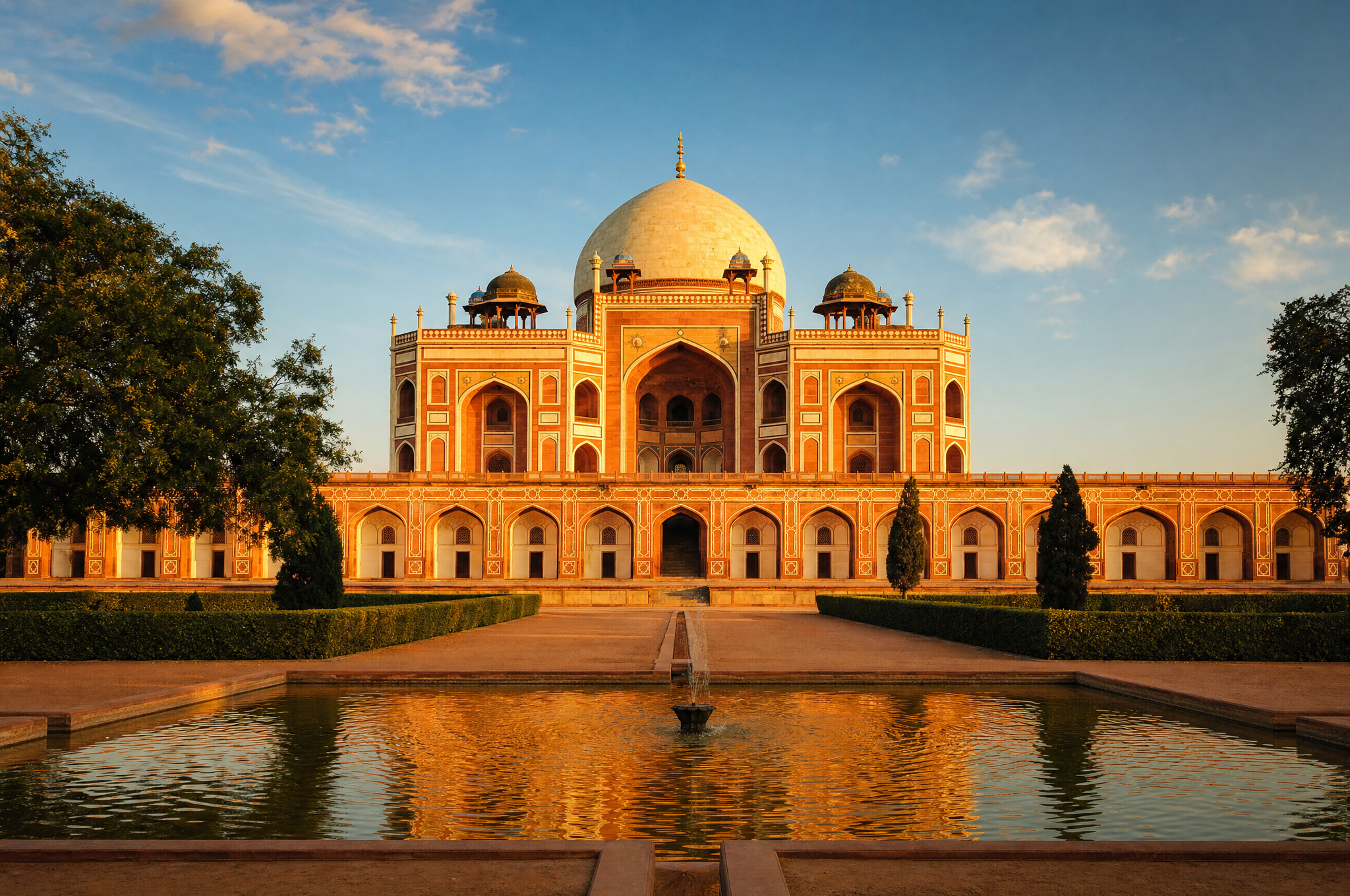
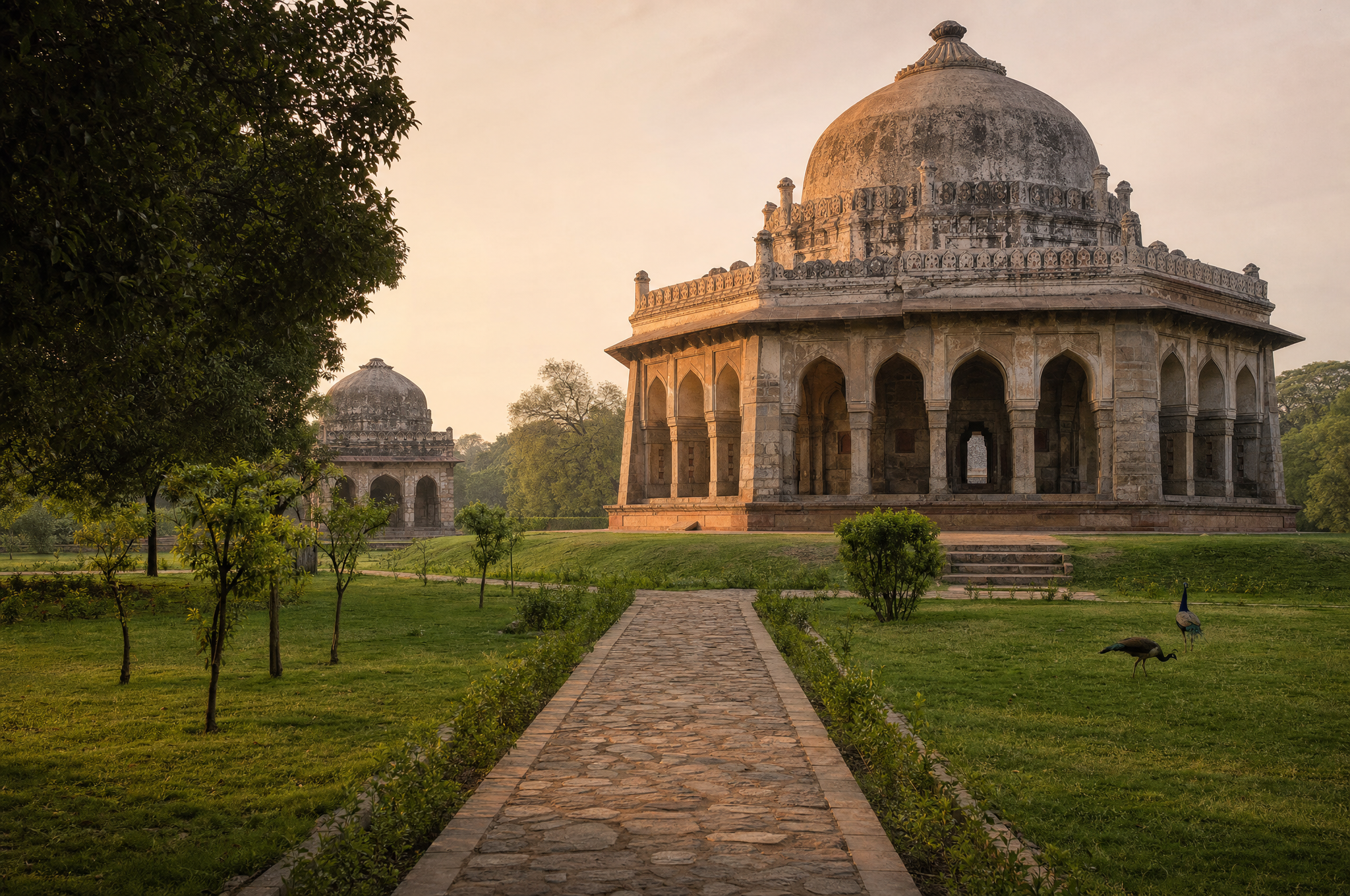
For more on Delhi's architectural heritage, see our guides to Humayun's Tomb — the Mughal garden tomb that the Qutub complex, in its way, made possible — and Lodhi Gardens, where the architectural evolution that began at the Qutub continued for another three centuries.