If you want to understand Delhi — really understand it, not the version served to tourists in Connaught Place — you must go to Mehrauli. This is where the city began, in the eleventh century, when the Tomar Rajputs built a fort on the Aravalli ridge and called it Lal Kot. Every subsequent dynasty that ruled Delhi — the Chauhans, the Mamluks, the Khaljis, the Tughlaqs, the Lodis, the Mughals, the British — left something behind in Mehrauli. The result is a neighborhood that is, quite literally, a thousand years of urban history layered on top of itself, still inhabited, still evolving, still surprising.
What makes Mehrauli different from Delhi's other historical districts is that it was never abandoned. Chandni Chowk was built in the seventeenth century; Lutyens' Delhi in the twentieth. Mehrauli has been continuously occupied since the eleventh. The people who live here walk past ruins on their way to the vegetable market. The mosques are still used for prayer. The Sufi shrine at the center of the neighborhood draws pilgrims from across the subcontinent, every Thursday night, as it has for seven hundred years. This is not a museum. This is a living neighborhood that happens to contain a millennium of architecture.
The Qutub Complex
Begin at the Qutub Minar, the 73-meter victory tower that is Mehrauli's most famous monument and Delhi's most recognizable silhouette. The complex surrounding the minaret is a UNESCO World Heritage Site and contains some of the earliest Islamic architecture in India. The construction began in 1199, under Qutb-ud-din Aibak, the first ruler of the Delhi Sultanate, and continued for nearly two centuries. For a detailed exploration of the minaret and the famous iron pillar, see our dedicated piece on the Qutub Minar complex.
The key thing to understand about the Qutub complex is that it was built, deliberately, on the site of a demolished Hindu and Jain temple complex. The Quwwat-ul-Islam Mosque, at the foot of the minaret, was constructed using columns and architectural elements repurposed from twenty-seven destroyed temples. You can see this in the mismatch between the Islamic arches and the Hindu decorative carvings — the builders were skilled masons, but they were working with materials designed for a different architectural tradition. It is a monument to conquest, and it does not hide it.
Mehrauli Archaeological Park
But the Qutub complex is the tourist Mehrauli. The real Mehrauli — the one that residents know — begins just behind it, in the 200-acre Mehrauli Archaeological Park. This is, in our editorial judgment, the most underrated historical site in Delhi. The park contains over 100 documented monuments, spanning every period from the eleventh-century Lal Kot fortifications to nineteenth-century colonial structures, and most visitors to the Qutub complex never realize it exists.
The park is free to enter and has no formal entrance — you simply walk in from any of several gaps in the boundary wall. There are no signboards, no ticket counters, no guides. You are on your own, which is part of the appeal. Here are the monuments worth seeking out:
Balban's Tomb (circa 1287)
The tomb of Ghiyas-ud-din Balban, the ninth Sultan of the Mamluk dynasty, is one of the most architecturally significant structures in the park. It is here, for the first time in India, that you see the true arch — the radiating voussoir arch that replaced the earlier corbelled arches of Hindu temple architecture. The tomb is in ruins, but the arches survive, and they mark a turning point in Indian architectural history. Every Mughal arch that followed descends, in some sense, from these.
Jamali Kamali Mosque and Tomb (circa 1528)
One of the most beautiful pre-Mughal structures in Delhi, built for the Sufi poet Jamali (whose real name was Shaikh Fazlullah) and an unknown companion named Kamali. The mosque is a fine example of early Mughal transitional architecture, with its single-aisle layout and ornate mihrab. The tomb, adjacent to the mosque, contains Jamali's grave and is covered in extraordinary tile work and plaster decoration — stars, geometric patterns, and Persian calligraphy in deep blue and red. The tomb is usually locked, but the caretaker (if you can find him) will often open it for a small tip.
Walking through Mehrauli Archaeological Park is like reading a thousand years of architectural history in a single afternoon — except the pages are sandstone, and someone has left them scattered across a hillside.
Rajon Ki Baoli (early 16th century)
A three-tiered stepwell — baoli — that descends below ground level to reach the water table. Stepwells were once common across north India, serving as water sources, community gathering places, and, in some cases, air-conditioned retreats from the summer heat. Rajon Ki Baoli is one of the best-preserved in Delhi, and the architecture is striking: the steps descend through three levels of arcades, each narrower than the one above, creating a geometric funnel toward the water. It is dry for much of the year, but after the monsoon, the lowest level fills with water and the effect is dramatic.
Metcalf's Folly
A nineteenth-century structure built by Charles Metcalf, a British civil servant who lived in Mehrauli and "improved" the landscape with a series of ornamental buildings — a bridge to nowhere, a lighthouse on a hill, a boathouse beside a dry tank. The Folly is the most visible of these, a small pavilion on a raised platform that looks like it was designed for a garden party that never happened. It is a reminder that the British, too, were enchanted by Mehrauli, and that they, too, left their architecture behind.
The Dargah of Qutbuddin Bakhtiar Kaki
Leave the archaeological park and walk into the living neighborhood, toward the dargah (Sufi shrine) of Qutbuddin Bakhtiar Kaki. This is the spiritual heart of Mehrauli, and it has been a pilgrimage site since the thirteenth century. Bakhtiar Kaki was a Sufi saint of the Chishti order, a disciple of Muinuddin Chishti of Ajmer, and his shrine is considered the second most important Chishti site in India, after Ajmer.
The dargah is open to all — regardless of religion, gender, or nationality — and it is one of the few places in Delhi where you can experience the city's syncretic traditions in their living form. On Thursday evenings, the shrine hosts qawwali performances, the devotional music of the Sufi tradition, and the courtyard fills with pilgrims, families, and the curious. The qawwali begins after the evening prayer (around 8 PM in summer, 6:30 PM in winter) and continues for several hours. Sit, listen, and if you're moved to, leave an offering at the grave. There is no pressure, no ticket, and no dress code beyond modest clothing.
Phoolwalon Ki Sair
Mehrauli is also the site of one of Delhi's most unusual festivals: Phoolwalon Ki Sair, the "procession of the flower sellers." Held annually in September or October, the festival is a uniquely syncretic event — a Hindu procession that honors both the Yogmaya temple (a Hindu shrine in the neighborhood) and the dargah of Bakhtiar Kaki. It was instituted in the early nineteenth century by the Mughal emperor Akbar Shah II, and it survives as a symbol of the religious harmony that was once a hallmark of Delhi's culture.
If you can visit during the festival, do. The procession features flower-bedecked pankhas (fans) carried through the streets, accompanied by music, dance, and — inevitably — food. It is one of the few public events in contemporary Delhi that genuinely captures the spirit of the old, composite city.
Practicalities
Mehrauli is in south Delhi, about 15 kilometers from Connaught Place. The nearest Metro station is Qutub Minar (Yellow Line), which is a ten-minute walk from the Qutub complex. The archaeological park is best explored in the early morning (7–9 AM) or late afternoon (4–6 PM); the midday sun on the open ground is punishing, especially from April to October. Allow a full day if you want to see the park, the Qutub complex, and the dargah. Bring water — there are no facilities inside the park.
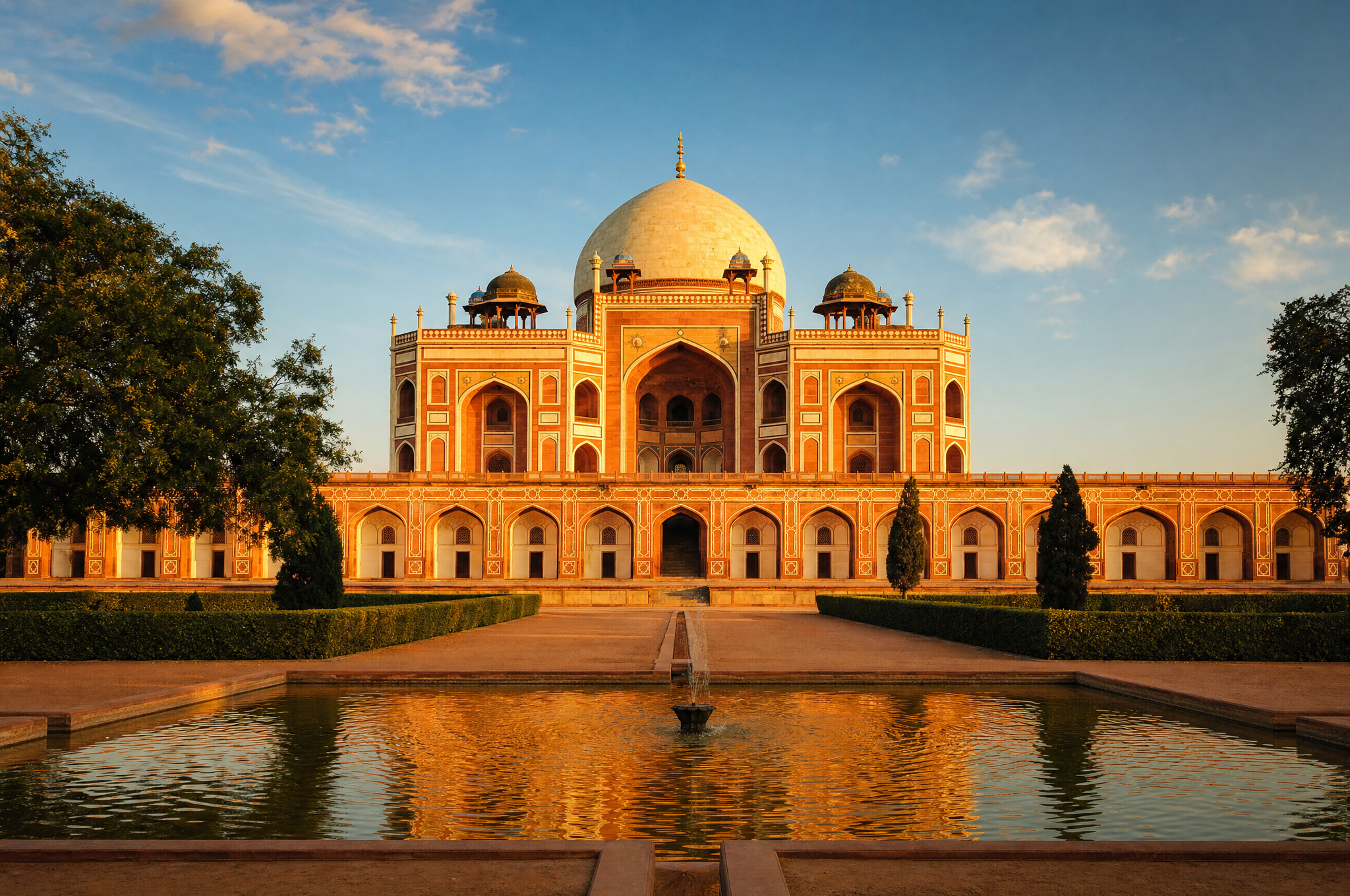
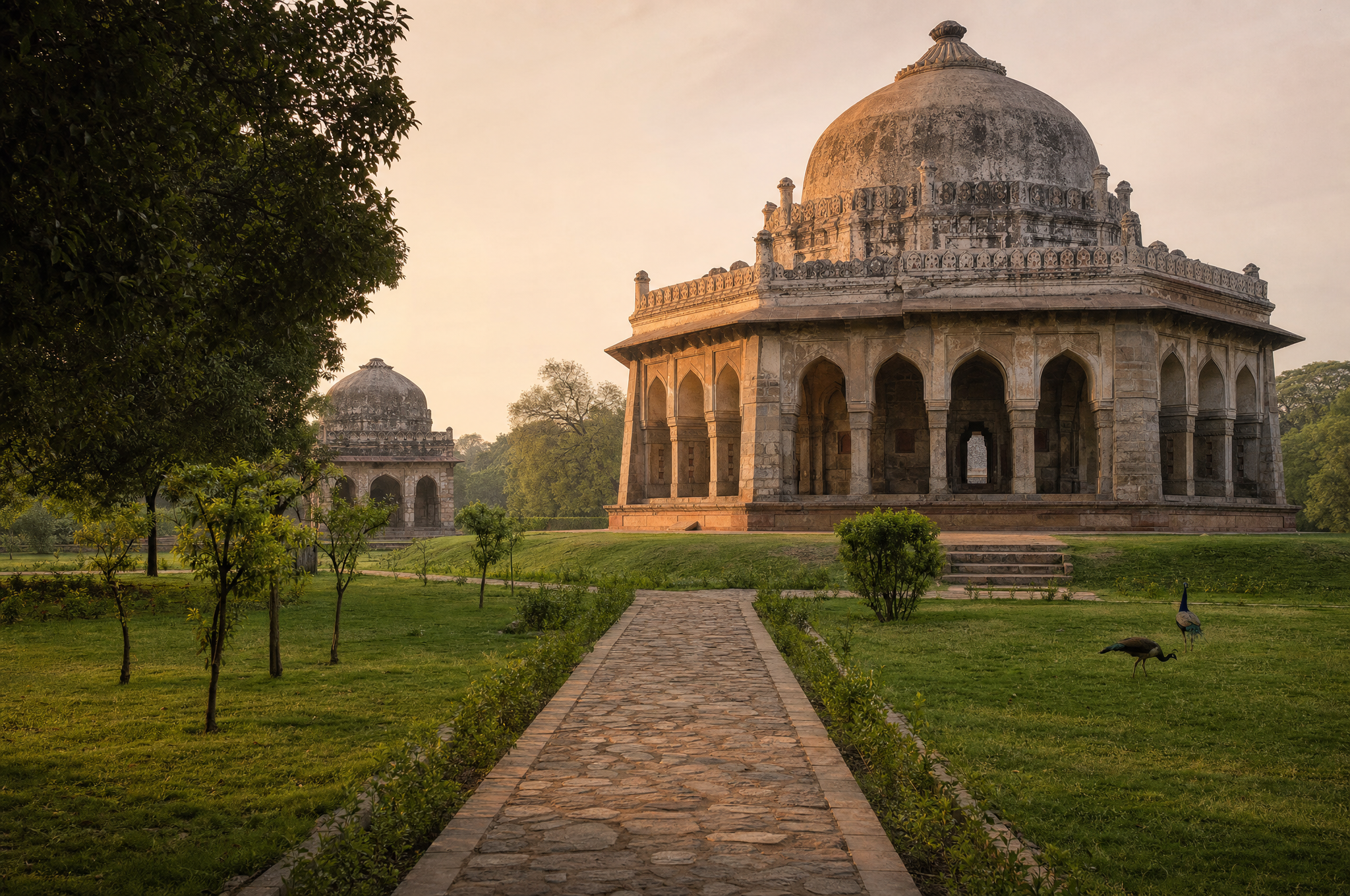
For those interested in Delhi's deeper history, pair Mehrauli with Lodhi Gardens (for the pre-Mughal Sultanate period) and Humayun's Tomb (for the Mughal period). Together, these three sites cover a millennium of Delhi's architectural evolution, and they will give you a more complete picture of the city than any museum.